Romania’s real estate market has not yet reached maturity, and that makes it attractive to American capital, which can find returns here that are hard to get at home. The condition is patience.
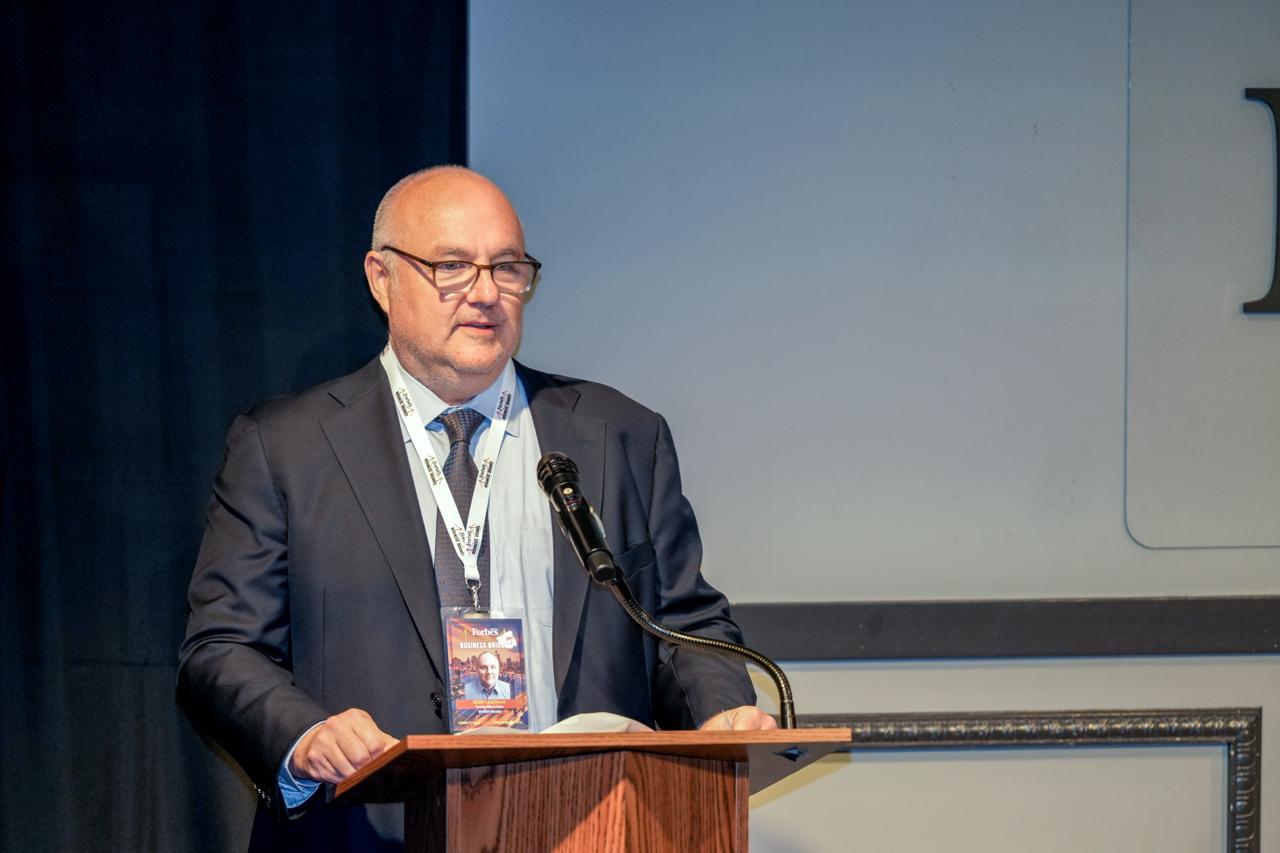
The conclusion emerged from the dialogue between Fulga Dinu, Country Manager of CPI Romania, and Faria Ibrahim, President & CEO of Hudson Edge Real Estate, at Forbes România Business Bridges 2026, the event organized by Forbes Romania at Forbes on Fifth in New York.
“American capital could find very good opportunities in Romania. American investors will have to have a little bit of patience, because we are European, and things in Europe don’t happen at the speed you are used to here. But we can find reliable people, projects and opportunities, in a country that is part of the European Union and can provide the kind of returns you wouldn’t get in the United States,” Fulga Dinu said.
Dinu knows both markets from the inside. She studied and worked in the United States, then returned to Romania at a time when the real estate market was only just taking shape, after the communist years. “Basically, I witnessed the shaping of the modern Romanian real estate market, and I’ve been a part of it,” she recalled.
The difference in maturity between the two markets shows, in her view, in how hard it is to find a new product. “Romania still hasn’t reached maturity in real estate. I believe there is a lot of room in all sectors, including logistics, and the good products that come to the market are still successful. We’re not at the level you are at here in the States, where you have to be extremely creative to find a niche product,” the CPI Romania country manager explained.
Faria Ibrahim, who visited Romania in June, sees the same gap from the other side of the Atlantic. For an American investor, however, the key is the local partner. “The United States has a more mature market, with operators that are a little more creative and a little more experienced. But Romania has so much room for growth, especially in retail and industrial. Even as an experienced operator, it is very important to have a local operator in that market,” Ibrahim said.
The American market is going through a difficult period of its own. Many properties financed in the years of low interest rates now have loans coming due, and their owners are struggling to refinance. For value-add investors such as Hudson Edge, this has opened up opportunities, but it has also changed the rules of the game. “We’re having to get very creative when it comes to structuring, because traditional financing just doesn’t work anymore for those assets. We’re using seller financing or private capital,” Faria Ibrahim explained.
The clearest convergence between the two speakers came on the topic of e-commerce. Both had witnessed predictions of the end of physical retail, and both had seen them proven wrong. “When e-commerce was at its peak, everybody was saying that sales in shopping centers would go down. We haven’t seen anything of that. On the contrary, sales have grown every year. We found synergies with e-commerce: people who order online also come to the physical shops to see the products. Instead of being a threat, it became a synergy,” Fulga Dinu said.
Ibrahim described the same phenomenon in the United States, where even companies born online have ended up opening stores. “Everybody was saying retail will not exist, but now we know that is not true. People want to touch and feel,” the Hudson Edge CEO observed. The challenges ahead, in her view, come from elsewhere: oversupply in the multifamily residential segment, the speed with which artificial intelligence is changing deal underwriting, and the rise of new asset classes such as data centers.
On offices, CPI Romania has bet on experience. “People still come to the office, but it’s very different from just renting a space where people come during working hours. We had to be creative and create a product where people feel they have an experience, restaurants, facilities, a nice ambiance. We have offices that look like lobbies, like hotels,” Dinu said.