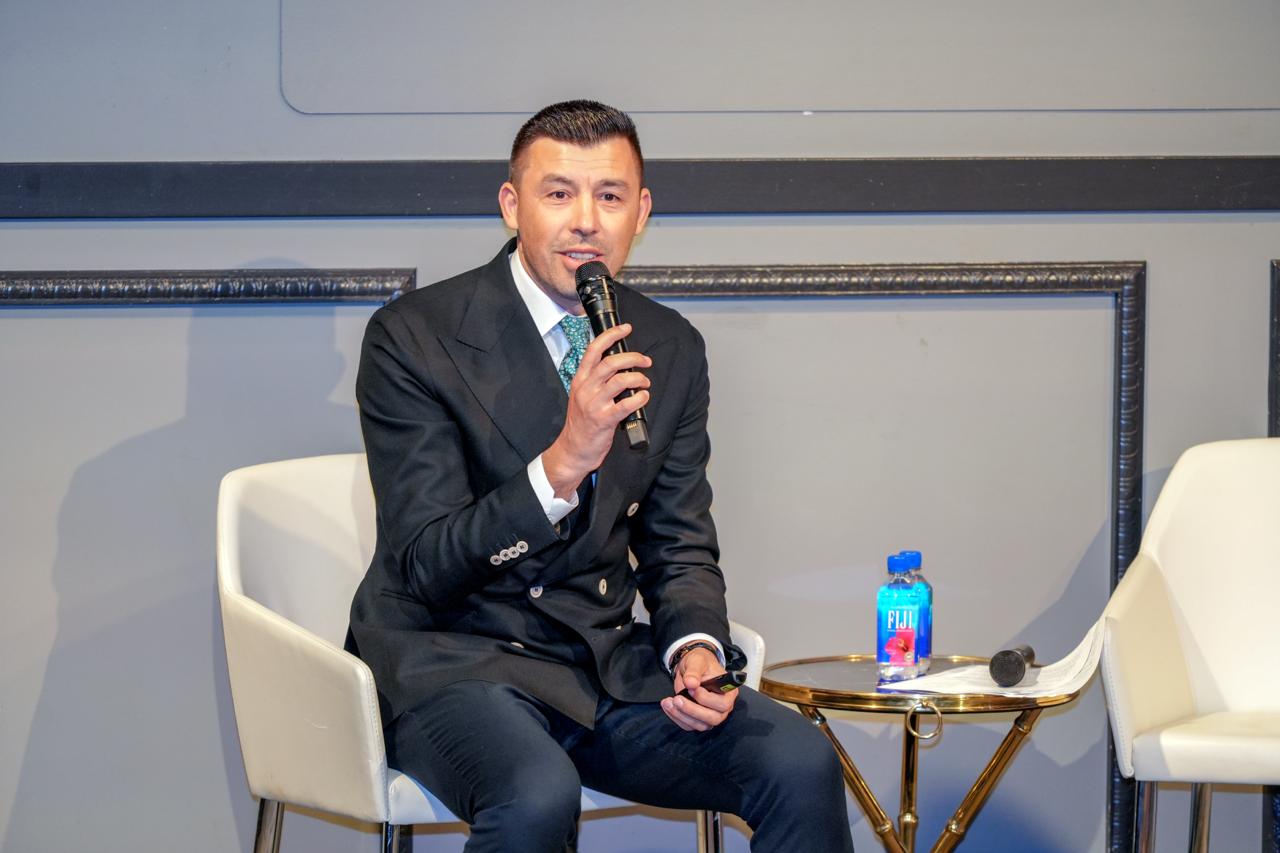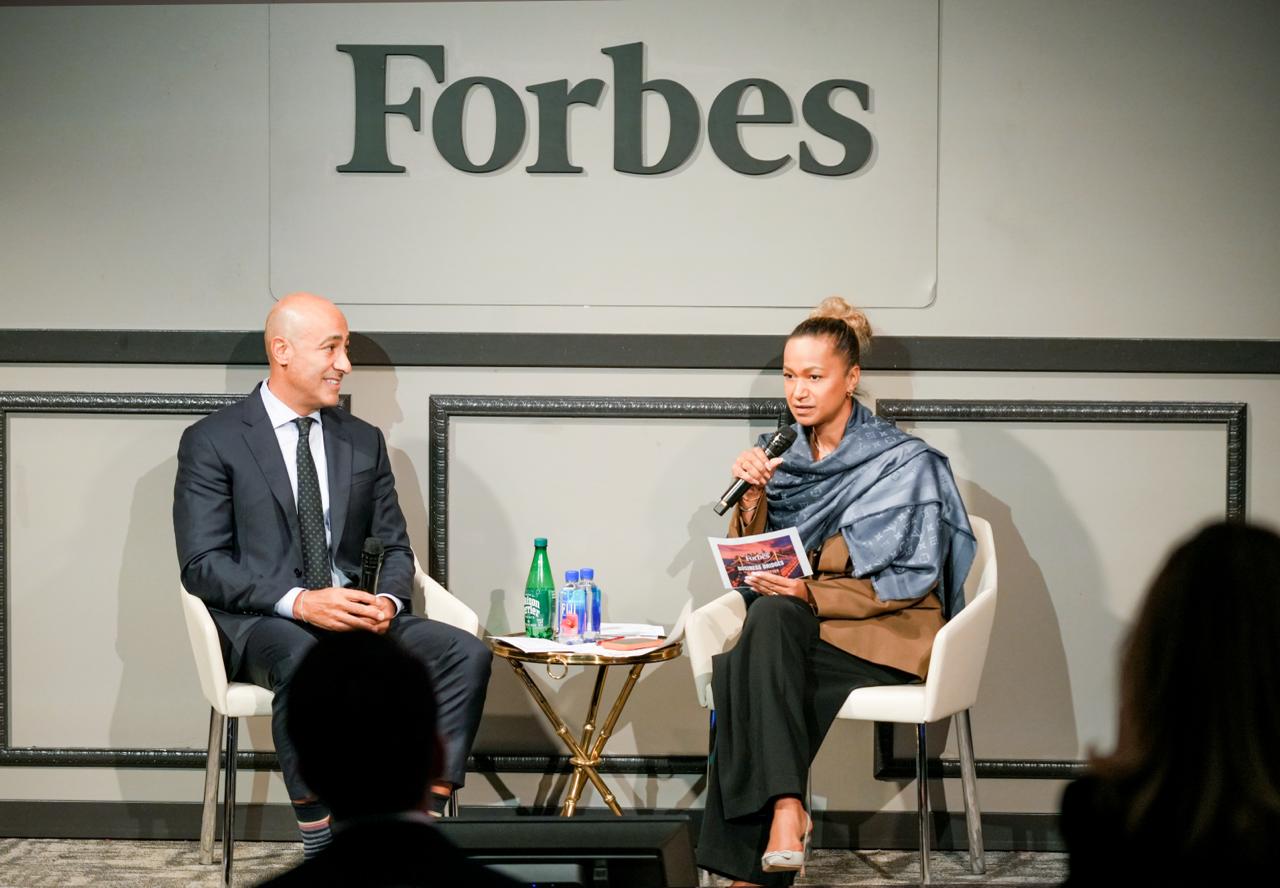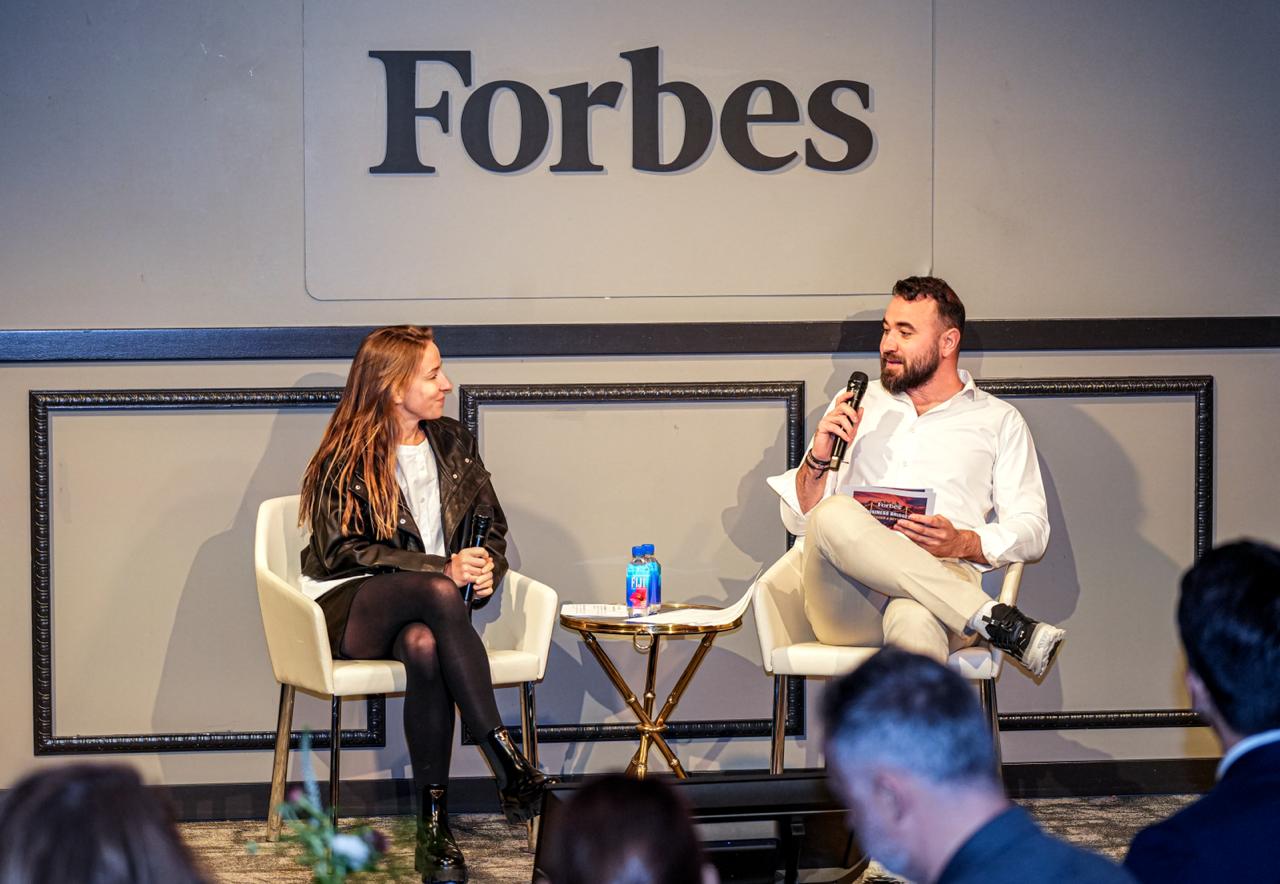
Artificial intelligence is making it possible, for the first time, to run companies with no employees at all. But who takes responsibility for them? This tension shaped the dialogue between Sabin Dima, Founder & CEO of humans.ai, and Andrada Morar, VP Customer Experience, Global Partnerships & Tech Alliances at UiPath, at Forbes România Business Bridges 2026, the event organized by Forbes Romania at Forbes on Fifth in New York.
Dima recently invested in a startup with a programmatic name, Zero Humans. “What fascinates me about this new world is the fact that, for the first time, you are able to create a company with no humans at all,” the humans.ai founder said. “I’m looking at this technology with which, for the first time, you can really achieve the impossible from an economic perspective. If this cost almost goes to zero, it means that for the first time we are going to have new business models that were impossible before,” Sabin Dima explained.
Andrada Morar drew the line where regulation begins. “When you think about regulated industries, I think zero humans would be a non-starter. There should still be a human to take accountability,” the UiPath executive said.
“You’re not just working in an experiment or in a sandbox anymore. You use these technologies for business outcomes. Nobody goes to a board and says, I’ve automated 200 processes,” Morar explained. The healthy starting point, in her view, is not what can be automated, but what business problem needs to be solved. And problems keep moving. “In any company, small or big, a process is not something that you define once and it stays like that, because people leave, companies grow, software gets replaced,” Andrada Morar said. UiPath is working on agents that look across a company’s processes as a whole and identify where they can be completely reimagined, or even eliminated.
Dima sees a more radical option: instead of retrofitting old companies, AI makes it possible to build new ones from scratch. He gave the example of a telecom operator, whose real asset is its license, leveraged today with thousands of employees, and which could be rebuilt with an entirely different structure.
The discussion then turned to Romanian entrepreneurs and the American market. Morar, who returns to Romania often, praised the technical expertise in Bucharest, but also in Cluj and other cities. She also identified a reflex that holds them back. “One thing I’ve seen in Romanian companies is a lot of humbleness. That feeling of ‘I’m just starting, I’m in Romania, I’m not in Silicon Valley’,” she observed.
The example she gave was UiPath’s own founder. “Daniel never started a company for the Romanian market. He jumped on a plane and went to India, then to Japan, which is still one of the hardest markets. For us, it became one of the strongest, because we were there and we solved the problem the market had. If you start with the right mindset, building a company that’s global and not limiting yourself to the European market just because it’s comfortable, you’re already a step ahead,” Andrada Morar said.
Dima went further, arguing that the road to America is simpler than it seems. “The United States has tons of problems and the budget for them. The American market gives you both the problems and the solutions. It’s ridiculous, but it’s so easy for a Romanian entrepreneur to create a startup that serves the US market,” he said.
For UiPath, the next challenge comes from a crowded market. More and more vendors promise the same thing, and clients need to see the differences under the hood. “Nobody thinks about the tech vendor in isolation. They think about the problem they need to solve and what they need to show the board when it comes to their AI investment. That’s how decisions are being made,” Morar explained.