


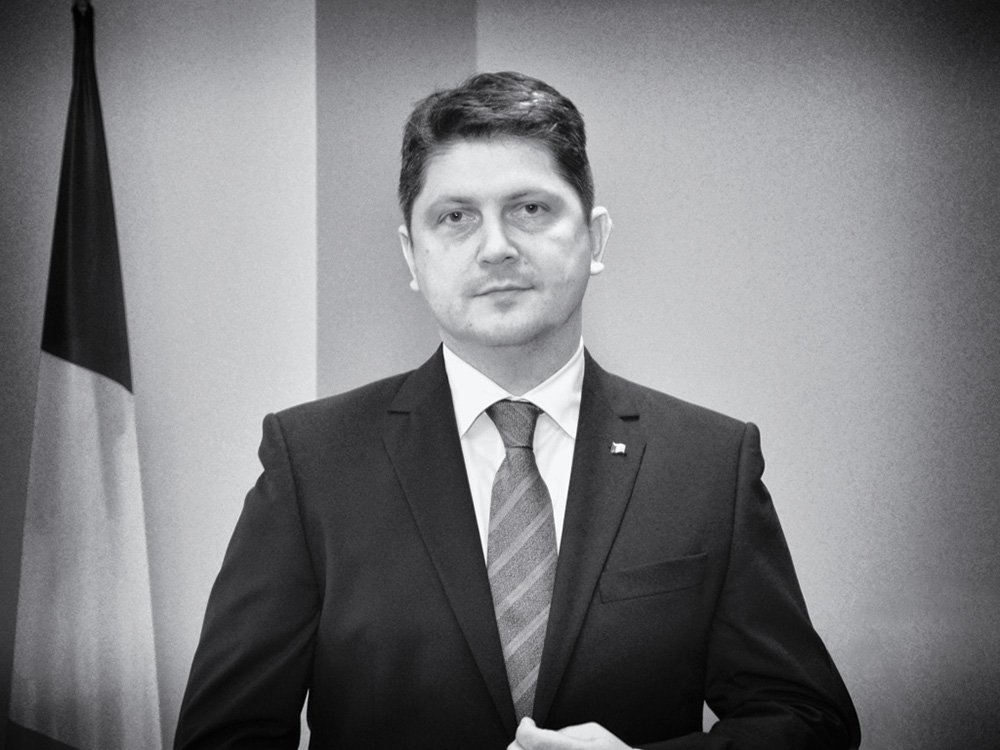
Forbes Romania: What would be the three things foreign investors should know about Romania, from the Foreign Affairs minister’s point of view?
Titus Corlăţean: I firmly believe that our country has a lot to offer in terms of profitable business. Of course, I would reiterate some of the strengths: the trend of economic growth, the macroeconomic figures and the low rate of unemployment. But I think we should go beyond that. Therefore I would point out that beside the usual arguments – favorable geographical location, a sizeable market, good entrepreneurship tradition, skilled and yet not very expensive workforce etc. – Romania is a trusted member of NATO and EU, which means that we share the same values and goals and we fully comply with the rules of the EU internal market.
Another extremely significant argument that I would make is the quality of the human resource. The foreign investors coming to us will find out that Romanians are hard-working people, friendly, well educated, with good communication skills, as well as IT and business skills. Since more and more Romanians are studying, working or travelling abroad, they have the opportunity of bringing home best practices, knowledge, experience and know-how.
Forbes Romania: What was the greatest success of the Romanian economic diplomacy in the last three years?
Titus Corlăţean: As we all know, the last years have been quite difficult for most economies in the European Union, a direct consequence of the international financial crisis that severely disrupted the production/export chains so vital for the proper functioning of a vast economy such as the EU.
In this context, it is important to highlight that Romania’s economy has managed to achieve a significant growth pace in the last three years, mainly the export sector (the exports reached 50 billion euros in 2013, an all-time high and an increase of 10% from relying on the previous year). This is a remarkable performance, given the dwindling demand from our traditional commercial partners that come mainly from the EU. It is a performance that was made possible, in part, by our economic diplomacy, which created the necessary environment for the export-oriented companies to find new markets.
Beside this obvious success, we have initiated, organized and participated in a considerable number of macro-regional cooperation initiatives such as the EU Strategy for the Danube Region, the China-Central and Eastern Europe Economic Forum and the Gulf Cooperation Council – Romanian Economic Forum. These events have already borne fruit and I am confident that these frameworks will continue to develop. I would also take this opportunity to mention the ELI (Extreme Light Infrastructure) project that will certainly attract further investments for the research and development sector, with positive effects for the overall economic environment.
The last couple of years have also seen Romania involved in a complex transformative process of its energy sector. This process is aiming to increase transparency, consolidate free market principles and create competitiveness.
The MFA was a catalyst both for promoting economic relations with traditional Euro-Atlantic partners and reviving ties with emerging markets in Asia-Pacific, Latin America, Middle East and Africa. I was personally involved in these efforts and toock specific steps in this respect during my visits to these countries. It is important to note the recent second meeting of the Romanian-Palestinian Intergovernmental Committee that we hosted in Bucharest, attended by a record number of ten ministers and high officials from the Palestinian Government. Concrete economic projects were top of the agenda. At the same time, the MFA is strongly encouraging the activity of both national and bilateral Chambers of Commerce, which can play a more prominent role in the development of economic exchanges – a very good example in this respect is the activity of the American-Romanian Business Council (AMRO).
Forbes Romania: What is the role of the economic diplomacy nowadays and how important it is in the whole diplomatic mechanism?
Titus Corlăţean: There is no doubt that, in modern diplomacy, the economic component plays a crucial role. Practically, there is no diplomatic dialogue, negotiation or measure that it is not determined, to a various extent, either by an economic interest or by certain developments in the economic area.
For the MFA, promoting Romania’s economic interests is primarily a political task. Thus, our goal is to provide a framework of cooperation, through active political and diplomatic dialogue with Romania’s foreign partners, which can facilitate and stimulate economic cooperation. Our diplomatic missions abroad are closely cooperating with the other ministries and governmental agencies in charge with economic issues, trying to identify and pursue new opportunities, manage risk and build relationships with the right foreign decision-makers, individual companies and potential investors.
Therefore, what diplomacy can and should do is creating opportunities, opening doors and creating a favorable environment for economic cooperation, allowing the business community to enter through this „door”.§